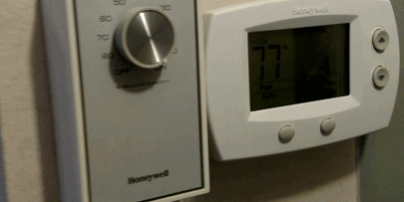
If you’ve noticed a blank screen on your thermostat, there could be a few different reasons why. In this blog, we’ll explore some of the most common causes and what you can do to fix them.
One reason why your thermostat screen may be blank is because the batteries need to be replaced. Most thermostats are battery powered, so if the batteries die, the screen will go blank. You can usually tell if this is the case if the screen
Why Is There a Blank Screen on My Thermostat?
A blank screen on your thermostat is usually caused by a loss of power or a tripped circuit breaker. To determine the cause, you should first check the power source to your thermostat. If the problem lies with the power source, you may need to call an electrician. If the power source is working but your thermostat still has a blank screen, there may be a problem with the thermostat itself. In this case, you should contact the manufacturer for assistance.
HVAC System
There are a few reasons your thermostat may show a blank screen. It may be that the power is off, the batteries are dead, or there is a problem with the wiring. If the power is off, check the circuit breaker or fuse box. If the batteries are dead, replace them. If there is a wiring problem, you will need to call a professional to diagnose and repair the issue.
Thermostat Screen
If your thermostat screen is blank, it could be due to a power issue, a problem with the display, or an issue with the control panel. To troubleshoot the issue, first check to make sure that the thermostat is receiving power. If the screen is still blank, try resetting the thermostat. If that doesn’t work, you may need to replace the control panel or the display.
Air Conditioning System
One of the most common reasons for a blank screen on a thermostat is that the air conditioning system is turned off. If the unit is not turned on, the screen will be blank. The second most common reason for a blank screen is a tripped circuit breaker. If the breaker has been tripped, it will need to be reset before the power to the unit can be restored and the screen will turn on.
Honeywell Thermostat
A blank screen on a Honeywell thermostat usually indicates that the batteries need to be replaced. If the batteries are not the problem, the unit may need to be reset.
Thermostat Blank
If your thermostat is blank, it may mean that the batteries need to be replaced. Follow these steps to check the batteries and replace them if necessary:
1. Press and hold the Menu button.
2. While holding the Menu button, press and release the Up arrow button to scroll through the menu options until you see “Replace Batteries.”
3. Press and release the Set/Run button to select “Replace Batteries.” The display will show “Replace batteries now?”
4. Press and release the Set/Run button again to confirm that you want to replace the batteries. The display will show “Remove old batteries” followed by “Install new batteries.”
5. Remove the old batteries from the thermostat and dispose of them properly.
6. Install two new AAA alkaline batteries in the thermostat, making sure that they are installed correctly according to the diagram inside the battery compartment.
7. Press and release the Set/Run button to confirm that you have installed new batteries successfully. The display will show “Batteries replaced successfully.”
Safety Switch
A safety switch is a switch that is designed to prevent accidents. It is usually used to prevent electrical shocks, fires, or other harm to people or property. The most common type of safety switch is the circuit breaker, which is found in most homes. Circuit breakers are designed to trip (or turn off) automatically when they sense an overload of electricity passing through them. This prevents the wires from overheating and starting a fire.
Tripped Circuit Breaker
It’s important to know the difference between a blown fuse and a tripped circuit breaker. If you have a blown fuse, you will need to replace it. If you have a tripped circuit breaker, you will need to find the circuit that is causing the problem and reset the breaker.
A circuit breaker is designed to protect your home from an electrical overload. When there is too much current flowing through the circuits in your home, the circuit breaker trips and shuts off the flow of electricity. This prevents your wiring from overheating and starting a fire.
There are two types of circuit breakers: conventional and GFCI (ground fault circuit interrupter). A GFCI protects against electrical shocks by shutting off power when it detects a ground fault. You can find GFCIs in areas where water is present, such as bathrooms, kitchens, garages, and outdoors.
If your screen is blank, start by checking for a blown fuse or tripped circuit breaker.