Florida may be known for its sunshine and warm weather, but when cooler months arrive, homeowners in Venice, Sarasota, and surrounding areas rely on their pool heaters to keep swimming comfortable year-round. Regular maintenance isn’t just about comfort—it’s the key to energy efficiency, performance, and the longevity of your pool heating system.
At Brisk Air Conditioning, we specialize in pool heater repair and maintenance, helping Florida homeowners stay ready for every season. Here are 10 essential pool heater maintenance tips to help you make the most of your investment during Florida’s cool season.
1. Check and Clean the Filter Regularly
Your pool’s filter plays a huge role in heater performance. A dirty or clogged filter can restrict water flow, making your heater work harder and less efficiently. Check and clean your filter every few weeks—or more often if your pool gets heavy use. Proper filtration ensures your heater can maintain consistent water temperatures without overworking.
2. Inspect for Debris Around the Heater
Leaves, dirt, and outdoor debris can block airflow around your pool heater, especially during fall and winter. Keep at least two feet of space around the heater clear to prevent overheating and airflow restriction. A simple visual check once a month can help prevent costly damage.
3. Monitor Your Pool Heater’s Thermostat Settings
It might seem obvious, but thermostat calibration can affect your energy bills and comfort. Set your heater only as warm as needed—typically between 78–82°F for comfort. If you notice inconsistent temperatures, it could indicate a thermostat issue that needs professional attention.
4. Run Your Pool Heater Periodically
Even if you’re not using your pool daily, it’s important to run your pool heater for short cycles during warmer months to keep components lubricated and working properly. Skipping this step can lead to startup issues when cooler weather returns.
5. Inspect Electrical Connections
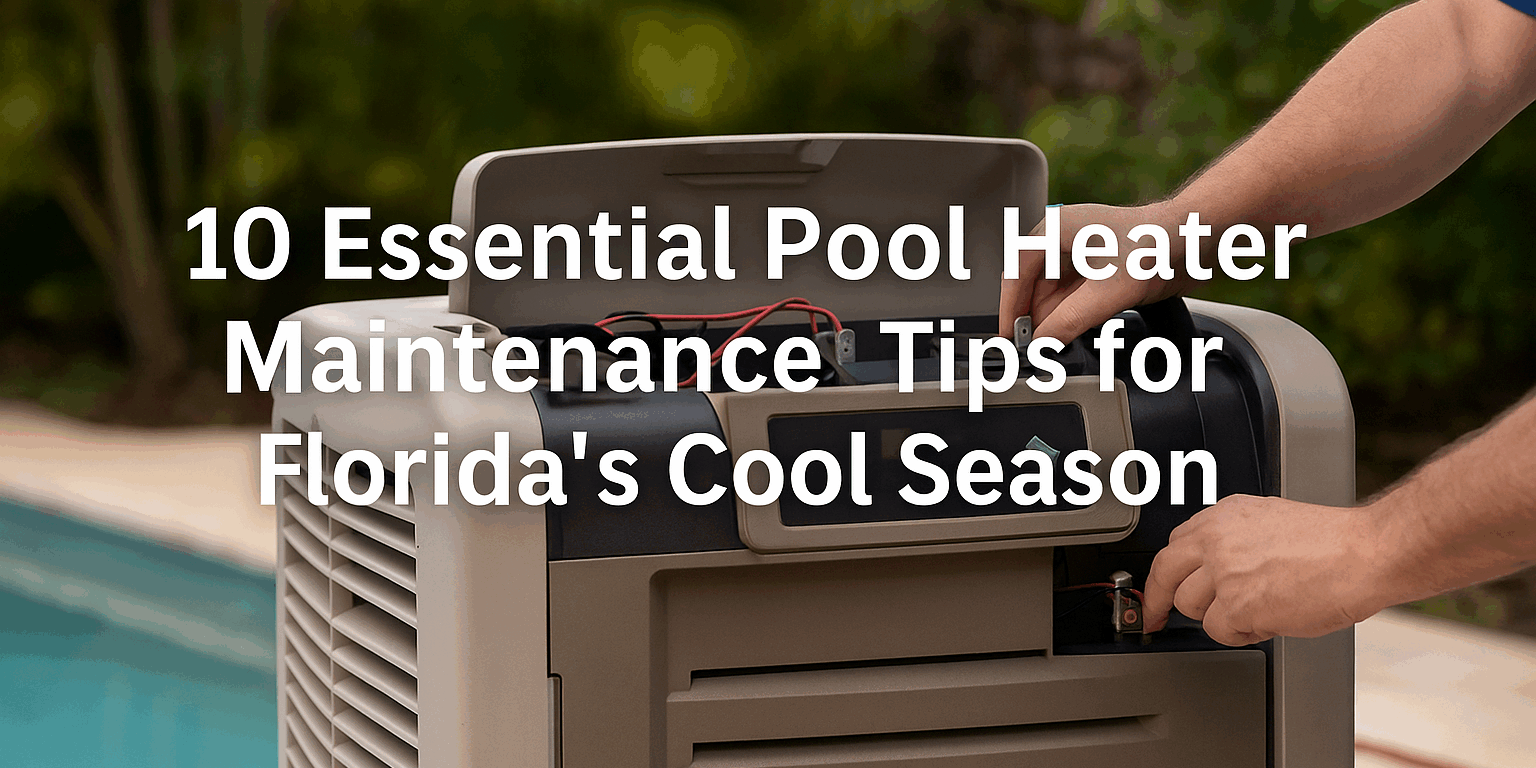
Loose or corroded connections can cause performance issues or even system failure. A licensed technician can safely inspect and tighten electrical components to ensure your system runs safely and efficiently. If you notice flickering displays or intermittent operation, it’s time to call in a professional.
6. Keep an Eye on Water Chemistry
Unbalanced pool water can damage your heater’s internal components, especially if pH or chlorine levels are off. Regularly test your pool’s water chemistry to prevent scale buildup or corrosion inside the heater. Balanced water protects your equipment and enhances efficiency.
You can learn more about proper pool water balance from the U.S. Department of Energy’s pool heating efficiency guide.
7. Schedule Professional Maintenance Annually
Preventive maintenance is the best way to avoid mid-season breakdowns. A professional service includes inspection, cleaning, and testing to ensure every component—from the heat exchanger to electrical systems—is functioning properly.
👉 Learn more about Brisk Air Conditioning’s pool heater maintenance and repair services as part of our Annual Maintenance Program.
8. Watch for Signs of Reduced Efficiency
If it’s taking longer for your pool to warm up or your heater cycles on and off frequently, it may be running inefficiently. These are early signs of restricted flow, scaling, or dirty components. Addressing these issues early can prevent costly repairs or replacements.
9. Protect Against Corrosion
Saltwater pools, in particular, can accelerate corrosion inside your heater. Rinse your heater’s exterior periodically and consider installing a sacrificial anode to reduce corrosion. Your HVAC or pool technician can recommend the best setup for your specific system.
10. Don’t Ignore Unusual Sounds or Smells
Rattling noises, burning smells, or gas odors should never be ignored. They could indicate loose components, electrical issues, or gas leaks. Turn off your system immediately and call a qualified technician from Brisk Air Conditioning to inspect and repair it before further damage occurs.
FAQs About Pool Heater Maintenance in Florida
1. How often should I service my pool heater in Florida?
At least once a year—preferably before winter—to ensure it’s ready for heavier use during the cooler months.
2. Can I clean my pool heater myself?
You can clear debris and rinse the exterior, but internal cleaning and component checks should always be done by a professional.
3. Why does my pool heater take longer to heat in winter?
Cooler air and water temperatures make your heater work harder. Regular maintenance ensures it’s running at peak efficiency.
4. What type of pool heater is best for Venice or Sarasota homes?
Heat pump pool heaters are ideal for Florida’s climate—they’re energy-efficient and perform well even in mild winter temperatures.
5. How can I tell if my pool heater needs repair?
If you notice inconsistent water temperatures, strange noises, or your heater won’t turn on, it’s time to schedule a service appointment.
Call to Action: Stay Comfortable All Season with Brisk Air Conditioning
Your pool should be ready for a swim—no matter the season! With professional pool heater maintenance from Brisk Air Conditioning, you’ll enjoy reliable performance, longer equipment life, and lower energy costs.
📍 Brisk Air Conditioning
Venice, Florida
📞 941-275-6258
🌐 www.briskairconditioning.com
👉 Contact us today to schedule your pool heater maintenance or join our Annual Maintenance Program for year-round comfort and care.