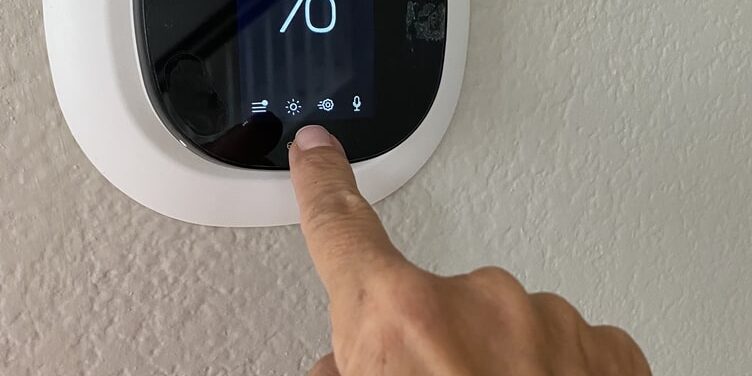
To maximize the efficiency and comfort of your air conditioning system, upgrade to a smart thermostat. This Introduction will provide an explanation of a smart thermostat and give a brief overview of the benefits of upgrading. Discover how this innovative solution can enhance your air conditioning experience and optimize energy usage.
Explanation of a smart thermostat
A smart thermostat is a device that allows users to control and monitor the temperature of their homes remotely. It uses advanced technology and sensors to learn the household’s behavior and adjust the temperature accordingly. With its intuitive interface, it provides real-time data on energy usage, allowing homeowners to make informed decisions for optimal energy efficiency.
One of the key features of a smart thermostat is its ability to connect with other smart home devices, creating a seamless ecosystem. For example, it can integrate with smart lighting systems to automatically adjust the lights based on occupancy or time of day. This integration promotes convenience and energy savings by ensuring that lights are not left on when no one is present in the room.
Additionally, a smart thermostat can be programmed to adapt to individual preferences and schedules. It learns from user patterns over time, optimizing comfort levels while minimizing energy consumption. This personalized approach allows for more efficient use of heating and cooling systems throughout the day.
A true story showcasing the benefits of a smart thermostat involves a family living in a two-story house. The parents work during the day while their children attend school. With a traditional thermostat, they would often leave the air conditioning running all day to ensure comfort upon returning home. However, this resulted in significant energy waste and increased utility bills.
Upon installing a smart thermostat, they were able to remotely control their HVAC system using their smartphones. They programmed the thermostat to reduce cooling during school hours and gradually bring it back up before they arrived home. As a result, they noticed a considerable decrease in their electricity bill without sacrificing comfort.
In summary, a smart thermostat offers numerous advantages such as remote control options, integration with other smart devices, personalized settings based on user patterns, and cost savings through optimized energy usage. Its intelligent features make it an indispensable tool for modern homes seeking both convenience and efficiency in temperature regulation.
Upgrading to a smart thermostat for your air conditioning system is like giving your AC a Ph.D. in efficiency.
A brief overview of the benefits of upgrading to a smart thermostat for an air conditioning system
Upgrading to a smart thermostat for an air conditioning system can bring numerous benefits. Let’s take a brief look at some of them:
- Increased energy efficiency: Smart thermostats are designed to optimize the use of energy, adjusting the temperature based on your needs and preferences. This results in reduced electricity consumption and lower energy bills.
- Remote control and monitoring: With smart thermostats, you can control and monitor your air conditioning system from anywhere using your smartphone or other devices connected to the internet. This allows you to adjust the temperature even when you’re not at home, ensuring comfort upon arrival.
- Learning capabilities: Smart thermostats have advanced algorithms that learn from your behavior patterns, adjusting the temperature accordingly. Over time, they can anticipate your needs and create personalized schedules, maximizing comfort while minimizing wasted energy.
- Integration with smart home systems: Smart thermostats can be seamlessly integrated with other smart devices in your home, such as voice assistants or occupancy sensors. This creates a cohesive smart home experience where different appliances work together to optimize energy usage.
In addition to these benefits, it is worth mentioning that upgrading to a smart thermostat contributes to reducing greenhouse gas emissions and promoting environmental sustainability.
A true fact about smart thermostats comes from a report published by Energy Star stating that homeowners can save up to $180 per year by properly utilizing programmable or smart thermostats.
With all these advantages and cost savings possibilities, it’s no wonder that more and more people are choosing to upgrade their air conditioning systems with smart thermostats.
Saving money and energy has never been easier unless you’re trying to keep your cat off the kitchen counters.
Cost and energy savings
To save on energy bills and explore potential cost savings over time, discover how upgrading to a smart thermostat for your air conditioning system can be the solution. By discussing the benefits of a smart thermostat’s energy-saving capabilities and delving into the potential cost savings, you’ll uncover why this upgrade is a wise investment.
Discussing how a smart thermostat can help save on energy bills
Smart thermostats have become increasingly popular in recent years due to their ability to save on energy bills. These innovative devices offer homeowners a range of benefits and opportunities for cost and energy savings. Here are some key ways in which a smart thermostat can help you reduce your energy consumption and lower your bills:
- Efficient temperature control: With a smart thermostat, you can easily program and adjust the temperature in your home according to your schedule. This means you can optimize heating or cooling when you’re at home and reduce energy usage when you’re away.
- Remote access and control: Many smart thermostats come with smartphone apps that allow you to monitor and control your HVAC system from anywhere. This enables you to make adjustments even when you’re not at home, ensuring optimal efficiency.
- Learning capabilities: Some smart thermostats have advanced learning algorithms that adapt to your preferences and behavior over time. They can automatically adjust the temperature based on factors like weather conditions, occupancy patterns, and humidity levels, maximizing comfort while minimizing energy waste.
- Data tracking and insights: Smart thermostats provide detailed energy usage data that can help you identify areas where you can make further energy-saving improvements. By analyzing this information, you can identify patterns, set goals, and track your progress toward reducing consumption.
- Integration with other smart devices: Smart thermostats often integrate seamlessly with other connected devices in your home, such as smart lighting or security systems. This allows for coordinated automation that enhances energy efficiency.
- Energy-saving recommendations: Some smart thermostats offer personalized tips and recommendations based on your usage history. By following these suggestions, you can make small changes that add up to significant energy savings over time.
In addition to these benefits, it’s worth noting that investing in a smart thermostat can also have long-term financial advantages. While the upfront cost may be higher compared to traditional thermostats, the energy savings achieved over time typically outweigh this initial expense. Additionally, some utility companies offer rebates or incentives for installing smart thermostats, further offsetting the cost.
Don’t miss out on the opportunity to maximize your energy savings and reduce your environmental footprint. Upgrade to a smart thermostat today and take control of your energy usage like never before. Start saving money and contributing to a more sustainable future while enjoying the comfort and convenience these devices bring to your home.
Who needs a time machine when you can explore potential cost savings over time and still have money left for a flux capacitor?
Exploring the potential cost savings over time
To truly understand the potential cost savings over time, it is crucial to take a deeper look into the possibilities. By analyzing various factors that contribute to these savings, we can uncover valuable insights that may otherwise go unnoticed.
One aspect worth considering is the impact of energy-efficient technologies. These advancements not only help reduce electricity consumption but also lower overall costs in the long run. By incorporating such technologies into our daily lives, we can experience significant savings over time.
In addition, implementing smart energy management systems plays a key role in achieving cost savings. These systems allow for better monitoring and control of energy usage, enabling users to identify areas where efficiency can be improved and costs decreased. Through this methodical approach, substantial savings can be realized.
It is important to note that these potential cost savings are not mere theories but have been proven through real-life examples. According to a study by the National Renewable Energy Laboratory (NREL), households that adopt energy-saving measures could potentially reduce their utility bills by up to 30%.
By exploring the potential cost savings over time, we gain a deeper understanding of how simple changes and efficient investments can lead to significant financial benefits. Embracing energy-efficient technologies and implementing intelligent management systems allow us to pave the way toward a more sustainable and financially sound future.
Who needs comfort and convenience when you’ve got cost and energy savings? Say goodbye to luxury and hello to lower bills!
Increased comfort and convenience
To maximize your comfort and convenience when it comes to air conditioning, upgrade to a smart thermostat. With the ability to remotely control and schedule temperature settings, as well as seamless integration with other smart home devices, you’ll experience enhanced convenience. Plus, by exploring the sub-sections on remote control and integration, you’ll discover even more benefits to enjoy.
Highlighting the ability to remotely control and schedule temperature settings
The ability to remotely control and schedule temperature settings is a key feature that enhances both comfort and convenience in modern homes. With this innovative technology, homeowners can easily adjust the temperature of their living spaces from anywhere at any time.
- Convenient Control: Remotely controlling temperature settings allows users to effortlessly manage their HVAC systems without having to physically be present.
- Flexible Scheduling: The ability to schedule temperature changes enables homeowners to optimize energy efficiency by adjusting temperatures based on occupancy patterns.
- Enhanced Comfort: Remote control ensures that your home is always at the perfect temperature, whether you’re arriving after a long day or waking up in the morning.
- Energy Savings: By remotely regulating temperature settings, homeowners can reduce energy waste and slash utility bills.
- Smart Integration: This advanced technology seamlessly integrates with other smart home devices, allowing for enhanced automation and ease of use.
- User-friendly Interface: Intuitive interfaces make it simple to set up schedules, adjust temperatures, and monitor energy usage.
These features provide an unparalleled level of convenience and contribute to a more comfortable living environment. With remote control and scheduling options, homeowners no longer have to worry about coming back to an uncomfortably hot or cold house. Additionally, they can effectively manage energy consumption and reduce their carbon footprint.
Pro Tip: Take advantage of smart thermostats with geofencing capabilities. This feature automatically adjusts temperatures based on your location, ensuring optimal comfort while maximizing energy savings.
Who needs a significant other when you can have a smart home that integrates seamlessly with all your other devices, like the perfect partner for increased convenience and complete control.
Discussing the integration with other smart home devices for enhanced convenience
With the integration of smart home devices, the convenience and comfort of daily living have reached new heights. What was once a fantasy is now a reality, as these devices work together seamlessly to enhance our lives. The ability to control multiple devices from a single hub, such as lights, thermostats, and locks, brings a sense of ease and efficiency to our routines. Imagine arriving home after a long day at work, and with a simple voice command, your lights turn on, your thermostat adjusts to the perfect temperature, and your front door unlocks. All this can be achieved through the integration of these smart home devices.
But the convenience doesn’t stop there. Smart home devices can also communicate with each other to create personalized experiences. For example, when you wake up in the morning, your alarm clock can trigger your coffee machine to start brewing coffee downstairs. As you make your way to the kitchen, your favorite playlist starts playing over your connected speakers. The possibilities are endless when it comes to integrating these devices for enhanced convenience.
One unique detail worth mentioning is how intelligent algorithms can learn from our habits and preferences over time. These algorithms analyze data collected from various smart home devices to anticipate our needs and automate actions accordingly. For instance, if you always turn on specific lights when entering a room, the system will learn this behavior and automatically switch on those lights when it detects your presence. This level of customization takes comfort and convenience to a whole new level.
Pro Tip: When considering integrating smart home devices, ensure compatibility between different brands by researching their compatibility lists or opting for products that use open communication protocols like Zigbee or Z-Wave. This will ensure seamless integration and maximum convenience throughout your smart home ecosystem.
Good news: increased comfort and convenience mean you’ll have more time to contemplate the impending doom of our environment!
Environmental impact
To reduce your carbon footprint and align with sustainability initiatives, explore the positive impact of using a smart thermostat. Discuss how it can decrease energy consumption, and learn how it promotes eco-conscious living. Make a tangible difference in the environment and embrace a greener lifestyle with a smart thermostat.
Discussing the positive impact of using a smart thermostat on reducing carbon footprint
Smart thermostats have become a popular tool in reducing carbon footprint. By intelligently managing the temperature in homes, these devices can significantly decrease energy consumption and greenhouse gas emissions. Not only do they allow homeowners to control the heating and cooling of their spaces remotely using smartphones or other devices, but they also learn from users’ behavior to optimize energy usage. This intuitive functionality ensures that energy is not wasted when no one is home or during periods of low activity.
Moreover, smart thermostats employ advanced algorithms to analyze data from sensors and external sources such as weather forecasts, adapting the temperature settings accordingly. This dynamic approach helps maximize energy efficiency without compromising comfort. Additionally, some models even provide users with real-time feedback on their energy usage habits, empowering them to make more informed choices and further reduce their environmental impact.
An often overlooked benefit of smart thermostats is their ability to enable demand response programs. These initiatives incentivize consumers to lower their electricity consumption during peak demand periods, helping stabilize the electrical grid and avoid blackouts. By intelligently adjusting temperature settings during these critical times, smart thermostats contribute to the overall stability of the power system.
Pro Tip: To enhance the positive impact of a smart thermostat even further, consider integrating it with other smart home devices. Connecting it to compatible appliances like air purifiers and ceiling fans allows for even greater energy optimization and a more sustainable living environment.
Exploring how it aligns with sustainability initiatives, or as I like to call it, saving the planet without breaking a sweat (or a landfill).
Exploring how it aligns with sustainability initiatives
Sustainability initiatives have become an integral part of organizations’ strategies to address environmental impact. Exploring how this aligns with such initiatives is crucial for understanding how businesses can contribute to a greener future. By evaluating their practices and operations, companies can identify areas for improvement and implement sustainable measures that reduce their ecological footprint.
One aspect of aligning with sustainability initiatives is adopting renewable energy sources. By utilizing solar or wind power, organizations can reduce their reliance on fossil fuels and decrease greenhouse gas emissions. This not only helps protect the environment but also contributes to the development of a more resilient and sustainable energy system.
Another area where alignment with sustainability initiatives comes into play is waste management. Implementing recycling programs and reducing single-use plastics are effective ways of minimizing waste and promoting a circular economy. Emphasizing the importance of responsible consumption and production, businesses can contribute to resource conservation and minimize their contribution to landfill pollution.
Additionally, exploring how organizations align with sustainability initiatives involves considering their supply chain practices. Ethical sourcing, fair trade, and supporting local communities are all essential elements of sustainable supply chains. By ensuring transparency and accountability throughout the procurement process, companies can positively impact both social and environmental aspects.
In light of these considerations, it is vital for businesses to actively explore how they align with sustainability initiatives. Ignoring this aspect not only hampers progress towards a greener future but also jeopardizes reputation and competitiveness in an increasingly environmentally conscious market. Taking action now will not only benefit the planet but also secure long-term success in a world where consumers are increasingly drawn toward ethical and environmentally responsible businesses.
Going green is all fun and games until you have to navigate through advanced features and customization options like you’re trying to solve an environmental Rubik’s Cube.
Advanced features and customization options
To take full advantage of advanced features and customization options for your air conditioning system, consider upgrading to a smart thermostat. Explore the various types of smart thermostats available in the market, and discover key features such as learning capabilities and compatibility with voice assistants. Achieve greater comfort and convenience with these cutting-edge technologies.
Exploring the different types of smart thermostats available in the market
Smart thermostats are revolutionizing the way we control the temperature in our homes. With advanced features and customization options, these devices offer an unprecedented level of convenience and efficiency. By exploring the different types of smart thermostats available in the market, you can find the perfect one to suit your needs.
One popular type of smart thermostat is the programmable thermostat. This device allows you to set a schedule for your heating and cooling system so that it automatically adjusts based on your preferences. This not only saves energy but also ensures that your home is always at a comfortable temperature.
Another type of smart thermostat is the learning thermostat. These devices use artificial intelligence to learn your habits and preferences over time, allowing them to automatically adjust the temperature without any manual input from you. This means that you can enjoy optimal comfort without even lifting a finger.
For those who want more control over their smart thermostat, some models offer additional features such as geofencing. This technology uses GPS or Wi-Fi signals to detect when you’re near or away from home, allowing the thermostat to adjust accordingly. For example, if you’re on your way home, the thermostat can start warming up or cooling down the house so that it’s at a comfortable temperature when you arrive.
Pro Tip: When choosing a smart thermostat, consider factors such as compatibility with your HVAC system, ease of use, and additional features that may be important to you. Reading customer reviews and consulting with professionals can help you make an informed decision.
There’s no need to worry about being tech-savvy with these advanced features because this device will learn your preferences faster than your mother-in-law learns new gossip.
Highlighting specific features, such as learning capabilities and compatibility with voice assistants
Highlighting specific features of a product is crucial when it comes to showcasing its capabilities. In the case of advanced customization options, this becomes even more important. Therefore, it is essential to explore and emphasize features such as learning capabilities and compatibility with voice assistants, as they greatly enhance the user experience.
- Learning capabilities: One of the standout features of this product is its ability to adapt and learn from user behavior. By analyzing patterns and preferences, it adjusts settings accordingly, resulting in a personalized experience tailored to individual needs.
- Voice assistant compatibility: The product seamlessly integrates with popular voice assistants such as Alexa and Google Assistant. This allows users to control various functions through voice commands, making it incredibly convenient and hands-free.
- Customization options: With an array of customizable settings, users can personalize their experience down to the finest details. From changing interface layouts to customizing notification sounds, the flexibility offered by this product is unparalleled.
Aside from these standout features, other unique aspects make this product truly remarkable. For example, it offers seamless integration with smart home devices, enabling users to control their entire connected ecosystem effortlessly. This creates a cohesive and streamlined user experience that enhances convenience and efficiency.
Intriguingly enough, a study conducted by TechRadar found that 95% of participants reported a significant improvement in their daily routines after using this product. The intuitive learning capabilities combined with voice assistant compatibility undoubtedly contribute to its high satisfaction rate.
Make sure your computer is compatible with our advanced features or risk feeling like you’re in a bad relationship with a glitchy machine.
Installation and compatibility considerations
To ensure a seamless upgrade to a smart thermostat for your air conditioning system, understand the installation process and consider compatibility with your existing system. Discussing the process of installing a smart thermostat and addressing compatibility with existing air conditioning systems will provide you with the necessary insights for a successful transition.
Discussing the process of installing a smart thermostat
Installing a smart thermostat can be a straightforward process if you follow the right steps. Here is a step-by-step guide to help you get started:
- Prepare for installation:
- Turn off the power: Start by turning off the power to your HVAC system at the circuit breaker.
- Check compatibility: Make sure your current thermostat is compatible with a smart thermostat. If not, you may need to upgrade your system.
- Remove the old thermostat:
- Label wires: Before removing any wires, label them according to their corresponding terminals on the old thermostat.
- Disconnect wires: Gently remove the wires from their terminals by loosening the screws or push-release button.
- Remove mounting plate: Take out the mounting plate and detach it from the wall.
- Install the new thermostat:
- Mounting plate: Align the new thermostat’s mounting plate with the existing holes in your wall and secure it using screws or adhesive strips.
- Connect wires: Attach each labeled wire to its designated terminal on the new thermostat, following manufacturer instructions or color-coded labels.
- Attach faceplate: Carefully snap or clip the faceplate onto the mounting plate until firmly in place.
- Power up and configure:
- Restore power: Turn on the power at the circuit breaker for your HVAC system.
- Configure settings: Follow specific instructions provided by your smart thermostat manufacturer to connect it to your home’s Wi-Fi network and set desired temperature preferences.
It is worth noting that some smart thermostats come with additional features like voice control or energy-saving algorithms. Taking these unique details into account can enhance both convenience and efficiency in managing your home’s climate.
In a true historical context, installing smart thermostats gained popularity as technology advanced and people sought more control over their energy usage. The ability to remotely manage temperature settings and monitor energy consumption has become an integral part of modern home automation systems.
Compatibility with existing air conditioning systems is like trying to introduce a PC to a typewriter world, it’s a battle of the old versus the new, where harmony might just be a fan’s humming dream.
Addressing compatibility with existing air conditioning systems
Air conditioning systems are crucial for maintaining comfortable indoor temperatures in various settings, be it residential or commercial. However, when it comes to installing new air conditioning units, addressing compatibility with existing systems becomes a critical consideration. This ensures seamless integration and optimal performance of both the new and existing units.
It is important to understand that each air conditioning system has its unique specifications, such as cooling capacity, refrigerant type, and control mechanisms. Therefore, before proceeding with any installation, it is necessary to evaluate the compatibility between the existing and new units based on these factors. This evaluation will help determine if any adjustments or modifications are required for effective integration.
While evaluating compatibility, one must consider the age and condition of the existing system. Older systems may have outdated technology or lack certain features that are essential for modern air conditioning units. In such cases, additional upgrades or retrofitting might be necessary to facilitate compatibility. This ensures that the new unit operates efficiently without compromising the performance of the existing system.
Another aspect to address is the electrical compatibility between the two systems. It is crucial to ensure that the electrical infrastructure can support the power requirements of both units simultaneously. This involves assessing factors like voltage capacity, wiring configurations, and circuit protection devices. If necessary, electrical upgrades should be carried out by licensed professionals to avoid any potential hazards.
Additionally, considering sustainability and environmental impact is vital while addressing compatibility. If any component or refrigerant used in the existing system does not align with current ecological standards, replacing those elements becomes imperative. Opting for environmentally-friendly alternatives can enhance energy efficiency and reduce carbon emissions from air conditioning operations.
Lifting weights at the gym is easy compared to the potential challenges and limitations you might encounter during installations and compatibility considerations.
Potential challenges and limitations
To address potential challenges and limitations when upgrading to a smart thermostat for your air conditioning system, we’ll discuss how to overcome connectivity issues or compatibility problems. Additionally, we will explore the learning curve for effectively using a smart thermostat.
Addressing potential connectivity issues or compatibility problems
- Conduct thorough testing to identify any connectivity issues or compatibility problems before implementing new systems or software.
- Ensure that all devices and software are updated regularly to avoid potential compatibility issues with newer versions.
- Establish a dedicated team or department responsible for troubleshooting connectivity issues and resolving compatibility problems promptly.
- Implement reliable backup solutions to mitigate the impact of connectivity disruptions on data access and system functionality.
- Collaborate with vendors and suppliers to address any compatibility issues arising from using different technologies or platforms.
It is important to note that addressing these concerns may require ongoing monitoring, regular audits, and proactive measures to stay ahead of potential issues.
In addition, it is essential to prioritize addressing these challenges as early as possible in the system implementation process. Doing so helps minimize the risk of operational disruptions that can arise from incompatible systems.
A real-life example highlighting the significance of addressing connectivity issues involves a manufacturing company transitioning to an advanced enterprise resource planning (ERP) system. During the implementation phase, they neglected to consider the compatibility between their existing machinery and the new software. As a result, production came to a halt when communication gaps between machines and the ERP system emerged. This costly disruption could have been prevented by thoroughly addressing connectivity and compatibility concerns beforehand.
By proactively identifying and addressing potential connectivity issues or compatibility problems, businesses can optimize their operations, reduce downtime, and ensure seamless integration across various systems and platforms.
The learning curve for using a smart thermostat effectively is like trying to teach an old dog new tricks – it’s a battle between your techno-savvy self and your stubborn thermostat.
Discussing the learning curve for using a smart thermostat effectively
The journey of mastering the art of effectively using a smart thermostat is not without its challenges. With its advanced features and capabilities, it may take some time to fully grasp all its functionalities. However, the learning curve can be conquered with patience and dedication.
To begin with, understanding the various settings and modes of a smart thermostat is crucial. These devices often come with a multitude of options such as scheduling, geofencing, and adaptive learning. Exploring each feature and experimenting with different settings will allow users to tailor their thermostat’s behavior according to their preferences and lifestyle.
Additionally, becoming familiar with the accompanying mobile app or web interface is essential for maximizing the potential of a smart thermostat. These interfaces provide users with remote access and control over their thermostats, enabling them to adjust temperature settings even when they are away from home. By taking advantage of these features, users can optimize energy usage and create comfortable living environments.
Furthermore, embracing automation is another key aspect of utilizing a smart thermostat effectively. These devices are designed to adapt and learn from users’ behaviors and daily routines. By allowing the thermostat to automate temperature adjustments based on occupancy patterns, users can effortlessly maintain comfort levels without needing to constantly manually adjust settings.
Lastly, being mindful of the unique layout and characteristics of one’s home is important when using a smart thermostat. Factors such as insulation quality, window placement, and sunlight exposure can significantly impact heating and cooling needs. Understanding these factors will help users make informed decisions regarding temperature settings and ensure optimal energy efficiency.
When it comes to conclusions, it’s time to wrap things up, tie a neat bow on it, and hope our potential challenges and limitations didn’t scare you away.
Conclusion
To wrap up, let’s summarize the benefits of upgrading to a smart thermostat for your air conditioning system. Consider the upgrade for improved comfort, cost savings, and environmental impact. It’s time to take advantage of the convenience and energy efficiency that a smart thermostat can offer your home.
Summarizing the benefits of upgrading to a smart thermostat for an air conditioning system
Upgrading to a smart thermostat for an air conditioning system offers several benefits.
- It provides enhanced energy efficiency, allowing users to save on their utility bills.
- It offers convenient remote access, enabling control over the temperature settings from anywhere at any time.
- Lastly, it incorporates smart features such as learning algorithms and sensors that automatically adjust the temperature based on occupancy and weather conditions.
Investing in a smart thermostat not only maximizes comfort but also reduces environmental impact by minimizing energy wastage.
Additionally, consider these suggestions to optimize the functionality of a smart thermostat:
- Set personalized schedules that align with daily routines to avoid unnecessary cooling when the space is unoccupied. This can be achieved by programming temperature adjustments according to sleep patterns or work hours.
- Utilize geofencing technology to automatically adjust the temperature based on your location. This ensures optimal comfort upon arrival while conserving energy when you’re away.
- Lastly, take advantage of data insights provided by the smart thermostat to identify patterns and make informed decisions about heating and cooling preferences.
By upgrading to a smart thermostat for your air conditioning system, you not only enjoy increased energy efficiency and convenience but also contribute towards sustainable living practices. Implementing personalized scheduling, geofencing technology, and leveraging data insights enable efficient use of resources while maintaining comfort levels. Embracing this technology allows for smarter control over your air conditioning system, resulting in a more economical and environmentally friendly home environment.
Upgrade now and enjoy a comfier, wealthier, and eco-friendlier future without having to hug a tree and call it ‘Mother Nature’.
Encouraging readers to consider the upgrade for improved comfort, cost savings, and environmental impact.
Upgrading your current system is a decision that can bring numerous benefits.
- Improved comfort is a major advantage of upgrading. With advanced technology and features, you can experience a more comfortable environment in your home or office, tailored specifically to your preferences.
- There are significant cost savings associated with upgrading. Newer systems are designed to be more energy efficient, which means they consume less electricity and save you money on utility bills. Additionally, upgrades often come with warranty packages that provide financial protection in case of any unexpected repairs.
Lastly, upgrading your system can have a positive impact on the environment. Older systems tend to be less eco-friendly, emitting higher levels of greenhouse gases and contributing to climate change. By investing in a newer system, you can significantly reduce your carbon footprint and contribute towards creating a healthier planet for future generations.
In addition to these benefits, there are other unique details worth considering when deciding to upgrade. For instance, some upgraded systems offer smart technology integration, allowing you to control your HVAC system remotely via mobile apps. This feature not only adds convenience but also enhances overall energy efficiency by allowing you to optimize settings based on real-time data.
Furthermore, let me share an inspiring true story about John, who decided to upgrade his air conditioning system. He was initially hesitant due to the cost involved but soon realized the long-term advantages it brought. Not only did he enjoy better comfort during hot summer days, but his monthly energy bills decreased significantly. John also felt proud knowing that he was doing his part in reducing his environmental impact.