October is when many seasonal homeowners return to Southwest Florida and discover a musty smell, a water stain, or an air conditioner that won’t stay on. After months of peak humidity, algae and sludge can build up in an AC condensate drain line and block the water’s route out of your home.
Learning how to clean AC drain lines can help you recognize a minor issue before it becomes a bigger problem, but only attempt basic maintenance if the equipment is safely accessible and there’s no standing water or sign of damage. Here’s how to spot trouble, take cautious steps, and know when to call an HVAC professional.
What does an AC condensate drain line do?
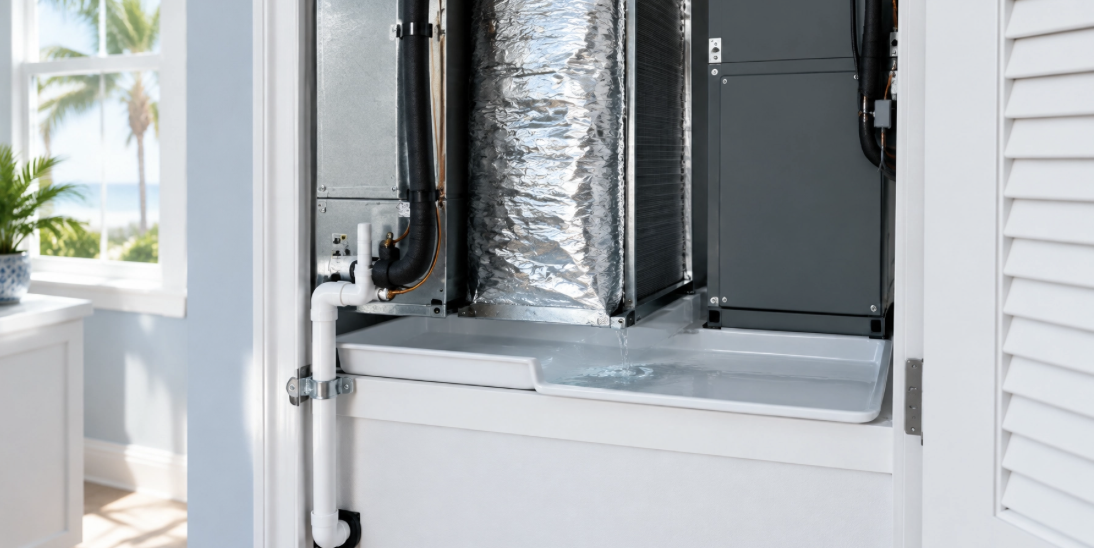
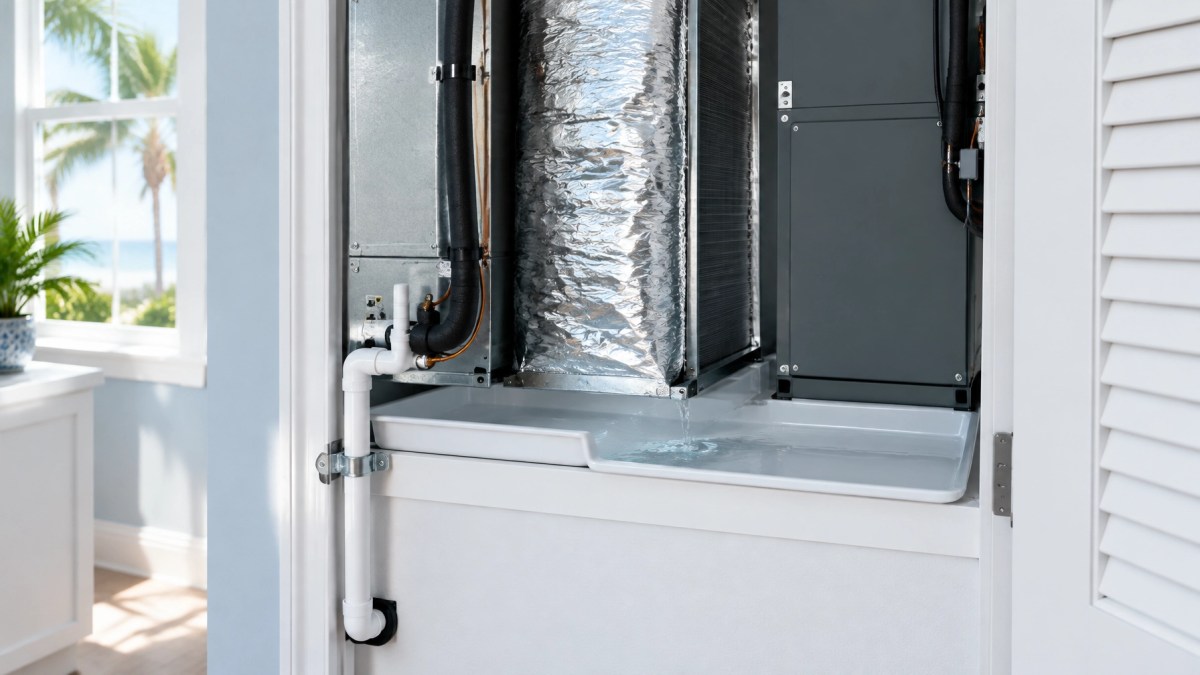
As your air conditioner cools indoor air, moisture collects on the evaporator coil. That water drips into a drain pan and flows through the condensate drain line to an outdoor discharge point or approved plumbing connection.
In Southwest Florida’s humid climate, your system may remove a significant amount of moisture during the cooling season. If the line gets clogged, water can back up into the pan, leak around the air handler, or trigger a safety switch that shuts the system off. Knowing how to clean AC drains is useful, but understanding this route is what helps you spot a blockage early.
Signs the AC drain line may be clogged
Before trying to work out how to clean AC drain lines, check for these warning signs:
- Standing water in the drain pan
- A musty smell near the air handler or supply vents
- Water stains near the air handler or on the ceiling below it
- The AC shutting off unexpectedly
- Slow or absent drainage from the outdoor outlet
- Dampness or pooling around the indoor unit
If you see water in the pan, active leaking, ceiling damage, or wet electrical components, turn the system off and call a professional. Don’t bypass a float switch or keep running an AC that may be overflowing.

How to clean AC drain lines: 7 cautious steps
These steps are for an accessible drain line and basic visual checks, not for taking apart the air handler or repairing concealed piping. If you’re unsure of any step, stop and contact an HVAC technician.
- Turn off the system’s power. Set the thermostat to Off, then switch off the breaker that supplies power to the indoor air handler. Wait until the unit is silent. If you can’t identify the correct breaker or safely access the equipment, don’t proceed.
- Locate the drain line and cleanout. Look for a PVC pipe connected to the indoor unit, with an accessible cleanout cap or tee. Don’t remove equipment panels around wiring, and don’t force a cap that won’t loosen easily.
- Inspect the pan, then stop if it contains water. Use a flashlight to look for standing water, rust, or signs of overflow. If water is present or the pan looks damaged, leave the system off and call for service. This is not the time to experiment with how to clean AC lines yourself; the blockage may already have caused a leak or may involve a failed safety switch.
- Use a wet-dry vacuum at the outdoor outlet, if accessible. If there’s no water in the pan and you can safely reach the outdoor drain termination, place the vacuum hose over the outlet and seal around it loosely with a rag. Run the vacuum briefly to try to draw out loose debris. Don’t use high-pressure air, a garden hose, or a rigid wire; they can damage fittings or push a clog farther into the system.
- Flush the cleanout gently with plain water. If the line appears open and there’s no backup, pour a small amount of clean water into the accessible cleanout. Don’t force water into a blocked line. Avoid harsh chemicals and drain openers, which can damage system components and won’t solve a broken or incorrectly routed pipe.
- Clean only surfaces you can safely reach. Use a soft brush or cloth on accessible algae or debris in the pan or around a removable cleanout opening. Don’t push a brush deep into the line. If the line is still slow or water doesn’t appear at the outdoor discharge, stop and arrange professional service.
- Restore power and verify drainage. Replace the cleanout cap, restore power, and run the AC while watching for leaks at the air handler and checking for water at the outdoor outlet. If the unit shuts off, the pan starts filling, or you notice a leak, switch it off and call a technician.
Pro Tip: When you reopen a seasonal home, check around the air handler and look at the outdoor drain outlet before leaving the AC running unattended. If anything looks wet, smells musty, or isn’t draining normally, get it checked before you leave.

When to call an HVAC professional
DIY maintenance has limits. Call a technician if you have:
- Repeated clogs, even after clearing the accessible outlet
- Standing water in the pan or evidence of a past overflow
- Water stains, damp drywall, or other water damage
- A line that’s cracked, sagging, concealed, or routed in a way you can’t inspect
- Standing water near the unit, a failed drain pump, or an AC that keeps shutting off
If you’re unsure how to clean AC drain lines without damaging a connection, professional service is the safer choice. A technician can inspect the drain pan, trap, line, pump, and float switch, then check whether the water is draining as intended.
Preventing another clog
A few regular habits can lower the chance of an unexpected drain problem. Learning how to clean AC drains matters, but prevention matters more:
- Replace your air filter monthly or as directed by the manufacturer.
- Keep the drain pan and line on your maintenance checklist.
- Schedule AC maintenance twice a year, including before extended absences when practical.
- Keep the outdoor discharge opening clear of leaves, mulch, insects, and other debris.
- Use drain tablets only if the equipment manufacturer approves them and you follow its directions.
- Ask about a float switch or condensate alarm if your home is vacant for long stretches.
For additional moisture-control guidance, the EPA’s brief guide to mold, moisture, and your home recommends keeping indoor relative humidity below 60%, ideally between 30% and 50% when possible. A drain-line cleaning is not a substitute for fixing a leak or controlling excess humidity.
Pro Tip: Add the drain pan and outdoor discharge check to your home-opening and home-closing routines. If a neighbor or property manager checks the house while you’re away, ask them to report new stains, musty odors, or water near the air handler.

FAQs
Can I pour bleach into an AC drain line?
No. Avoid bleach, chemical drain openers, and other harsh cleaners unless your equipment manufacturer specifically approves a product and procedure.
How often should I check my condensate drain?
Check it during routine maintenance and when reopening a seasonal home. In Southwest Florida, twice-yearly HVAC maintenance is a sensible schedule.
Why does my AC shut off when the drain is clogged?
Some systems have a float switch that turns the AC off when water rises in the drain pan. It’s a warning that needs attention, not a switch to bypass.
Should I keep using the AC if there’s water in the drain pan?
No. Turn the system off and contact an HVAC professional to reduce the risk of overflow and water damage.
Get help with an AC drain problem in Venice and nearby communities
If you’ve found water, a persistent musty odor, or a drain line that keeps clogging, knowing how to clean AC drain lines is only the first step. Brisk Air Conditioning can inspect the system and help you choose a practical next step. Our licensed, insured, BBB-accredited team serves homeowners and businesses across Southwest Florida. Brisk Air Conditioning is licensed under CAC1818383.
Explore Brisk Air Conditioning’s HVAC services or call 941-275-6258 to ask about service or scheduling.
Brisk Air Conditioning
1435 E Venice Ave #104
Venice, FL 34292
Phone: 941-275-6258