
For business owners and property managers, a reliable commercial hvac sarasota strategy is essential, not optional. In Sarasota County, long cooling seasons, high humidity, salt air, and sudden weather changes can push rooftop units and packaged systems harder than expected.
An inefficient HVAC system raises utility costs, creates uncomfortable rooms, and increases the risk of disruptive breakdowns. If your system runs longer than necessary, then your energy bills and equipment wear will usually rise together.
Use these eight proven strategies to improve comfort, lower operating costs, and extend the useful life of your commercial equipment.
1. Start with a Proven Commercial HVAC Efficiency Audit
Before replacing equipment or changing thermostat settings, identify where your building is losing energy. A professional commercial hvac sarasota audit should review:
- Equipment age, capacity, and operating condition
- Supply and return airflow
- Thermostat and sensor accuracy
- Duct leakage and insulation
- Outdoor-air intake and ventilation settings
- Operating schedules and tenant comfort complaints
- Refrigerant performance and electrical consumption
The goal is to create a prioritized plan. Some improvements may be simple, such as correcting a schedule or replacing restricted filters. Others may involve duct repairs, control upgrades, or equipment replacement.
Pro Tip: Compare energy use year over year while accounting for occupancy and weather. A rising bill does not always mean rates are the only problem; declining system performance may be contributing.
2. Use Smart Controls, Schedules, and Setpoints
Commercial HVAC systems often waste energy when they cool empty offices, vacant retail areas, or unoccupied common spaces. Review your building’s programmed schedules and confirm that they reflect actual business hours.
Consider using:
- Programmable thermostats
- Building automation systems
- Occupancy sensors
- Zone controls
- Night and weekend setbacks
- Demand-controlled ventilation where appropriate
Avoid extreme thermostat changes. If you lower the temperature dramatically to cool a warm space faster, then the system may run continuously without producing meaningful additional comfort.
A properly configured control system allows your commercial hvac sarasota equipment to respond to real demand instead of operating on outdated assumptions. Recheck schedules after tenant changes, seasonal shifts, and renovations.
3. Follow a Consistent Preventive Maintenance Plan
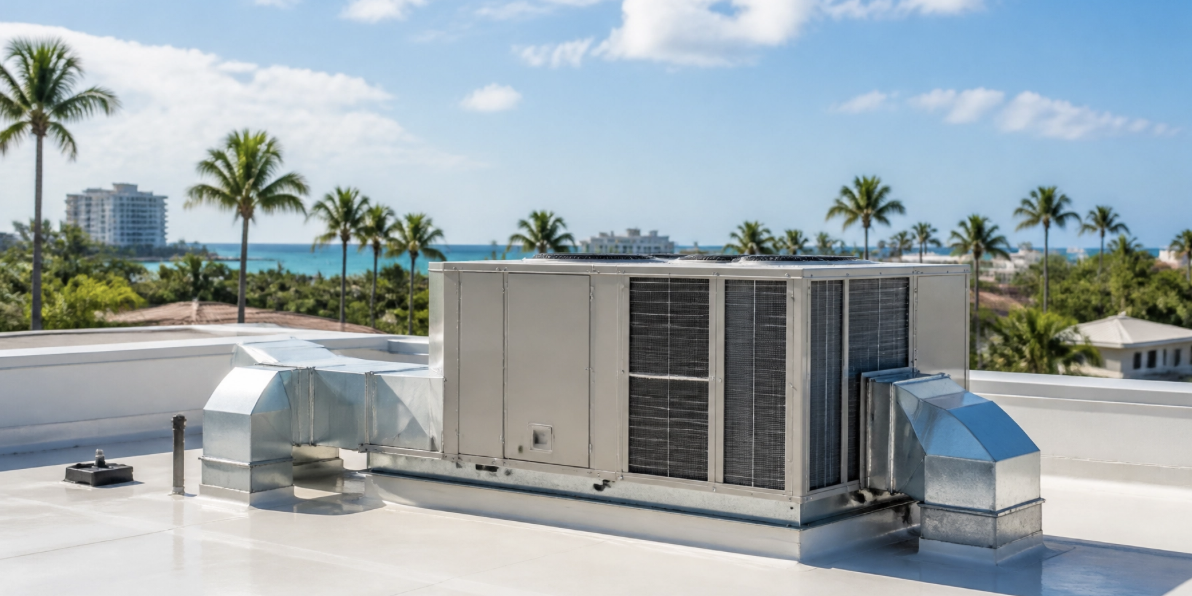
Preventive maintenance is one of the most cost-effective ways to protect commercial cooling equipment. Rooftop units are exposed to intense sunlight, wind-driven rain, pollen, leaves, and coastal moisture. Those conditions can affect coils, electrical components, drain pans, cabinet seals, and belts.

A professional maintenance visit should typically include:
- Inspecting and replacing filters as needed
- Cleaning condenser and evaporator coils
- Checking refrigerant performance
- Testing electrical connections and capacitors
- Inspecting belts, bearings, and fan motors
- Clearing condensate drains and pans
- Checking dampers and airflow
- Calibrating temperature and humidity sensors
If filters become clogged, then airflow drops and the blower must work harder. If coils become dirty, then heat transfer suffers and the compressor may run longer. Small maintenance issues can become expensive failures when ignored.
Brisk Air Conditioning offers commercial maintenance support throughout the region. Learn more about our annual maintenance program to create a more predictable service schedule.
4. Manage Sarasota’s Heat and Humidity
Temperature is only part of the comfort equation. Sarasota’s humid climate creates a significant latent cooling load, meaning your HVAC system must remove moisture as well as heat.
Excess indoor humidity can cause:
- Sticky or uncomfortable conditions
- Musty odors
- Mold and mildew growth
- Condensation around ducts or diffusers
- Corrosion and premature equipment wear
- Poorer indoor air quality
Your commercial hvac sarasota system should be checked for correct outdoor-air damper operation, drain performance, coil cleanliness, and humidity sensor accuracy.
If outdoor air dampers remain open too far, then the system may pull in more hot, humid air than the building needs. If the system does not run long enough to dehumidify, then occupants may feel uncomfortable even when the thermostat reaches its temperature setting.
For more background, review Brisk Air Conditioning’s guide to how humidity affects air conditioning.
5. Seal and Insulate Commercial Ductwork
Leaky ductwork can send conditioned air into ceiling cavities, mechanical spaces, or rooftops instead of occupied areas. This is especially problematic in retail stores, offices, and multi-family properties with long duct runs or multiple zones.
Ask a qualified HVAC professional to inspect:
- Duct seams and connections
- Flexible duct sections
- Supply and return plenums
- Insulation condition
- Registers and diffusers
- Areas where ducts pass through walls or ceilings
Do not rely on ordinary household duct tape for permanent repairs. Professional duct sealing materials and methods are designed to withstand HVAC operating conditions.
A well-sealed distribution system helps your commercial hvac sarasota equipment deliver more cooling with less runtime. It can also reduce hot spots, tenant complaints, and uneven temperatures between rooms.

6. Upgrade Aging Equipment Strategically
Replacing a commercial HVAC system is a major investment, but continuing to operate severely outdated equipment can also be expensive. Older systems may have declining efficiency, obsolete controls, hard-to-source parts, or frequent refrigerant and electrical issues.
Review replacement options when:
- Repairs are becoming frequent
- Cooling performance is inconsistent
- Utility costs continue rising
- The unit is near the end of its expected service life
- Replacement parts are difficult to obtain
- The equipment uses outdated refrigerant technology
When comparing systems, look beyond the initial price. Consider efficiency ratings, part-load performance, warranty coverage, maintenance access, ventilation requirements, and compatibility with your building controls.
A properly sized replacement is critical. Oversized equipment may cool quickly but fail to remove enough humidity. Undersized equipment may run constantly during Sarasota’s hottest months. An experienced commercial hvac sarasota contractor can evaluate the building load before recommending a replacement.
7. Monitor Performance Before Problems Become Emergencies
You cannot manage what you do not measure. Track operating information such as:
- Monthly energy consumption
- Runtime by unit or zone
- Supply-air and return-air temperatures
- Indoor humidity
- Repeated service calls
- Temperature complaints
- Filter pressure or airflow restrictions
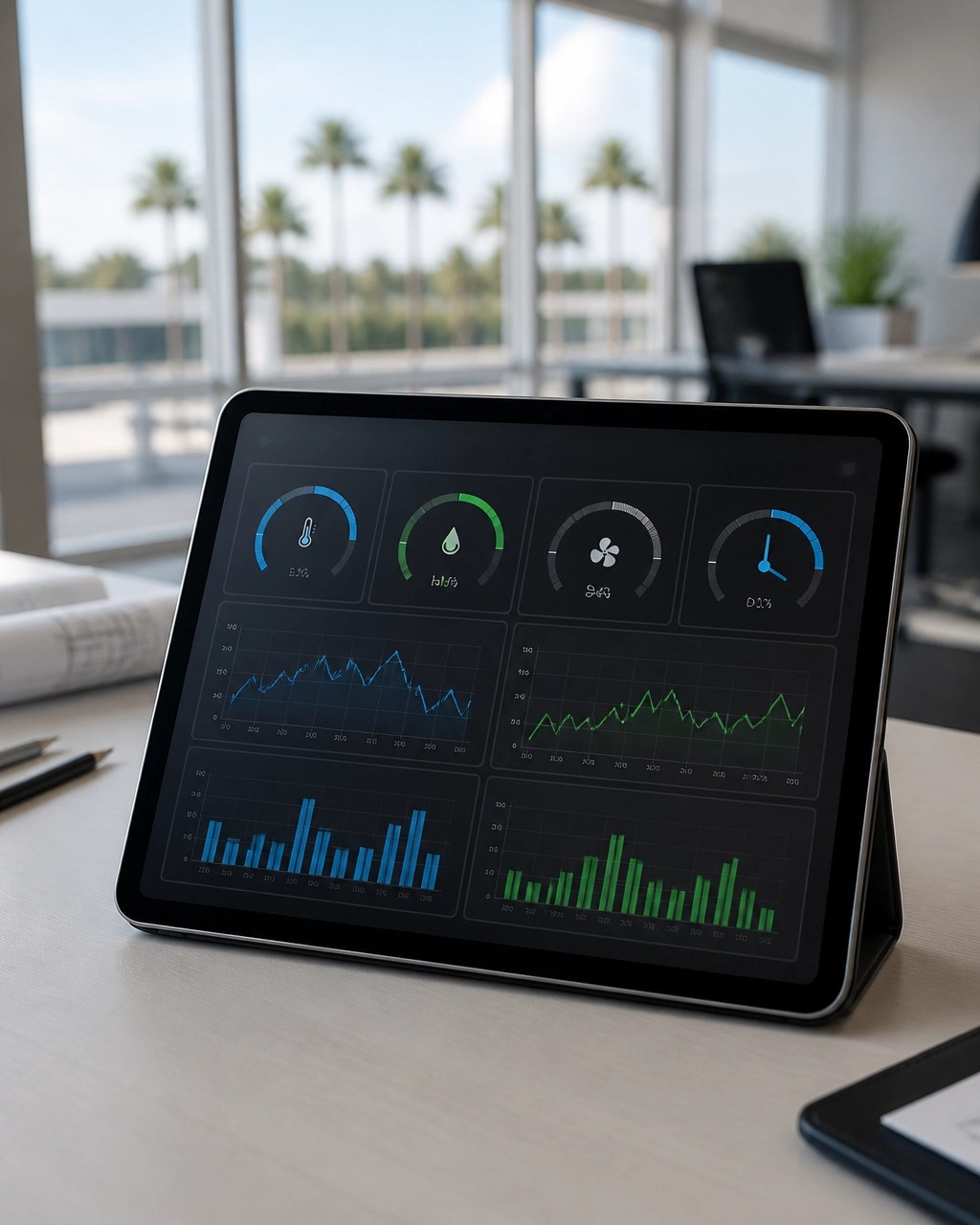
A building management system can make this information easier to review. Even without advanced automation, consistent maintenance records and utility tracking can reveal changes in performance.
If a rooftop unit suddenly runs longer than normal, then investigate before assuming the equipment simply needs replacement. A failing sensor, stuck damper, refrigerant problem, or airflow restriction may be the real cause.
For additional efficiency guidance, consult this commercial HVAC energy management guide from Energy NSW. This standard external link is provided for general educational reference.
8. Train Staff, Tenants, and Property Teams
Even the best commercial hvac sarasota installation can waste energy when occupants override controls, leave doors open, block vents, or report comfort issues too late.
Create simple operating guidelines:
- Keep exterior doors closed when possible
- Do not block supply registers or return grilles
- Report unusual noises, odors, leaks, or hot spots promptly
- Avoid unauthorized thermostat overrides
- Keep rooftop access areas clear
- Document recurring comfort complaints by time and location
Property managers should also keep equipment records, including model numbers, installation dates, maintenance history, warranty details, and past repairs. Good documentation helps technicians diagnose problems faster and plan capital improvements more accurately.
4 Essential FAQs About Commercial HVAC in Sarasota
1. How often should commercial HVAC systems be serviced in Sarasota?
Most commercial systems benefit from professional maintenance at least twice annually. High-use buildings, restaurants, and properties with heavy humidity loads may need more frequent inspections.
2. What is the most common cause of rising commercial HVAC costs?
Common causes include dirty filters, fouled coils, duct leakage, incorrect controls, refrigerant issues, failing motors, and equipment operating outside its design conditions.
3. Should I repair or replace my commercial rooftop unit?
Compare repair frequency, equipment age, energy performance, parts availability, and replacement cost. A professional evaluation can help you make an informed decision.
4. Can duct repairs improve commercial HVAC efficiency?
Yes. Sealing leaks and correcting insulation problems can improve airflow, reduce conditioned-air loss, and help equipment reach desired temperatures more efficiently.
Choose a Smarter Commercial HVAC Plan
Optimizing your commercial hvac sarasota system does not always require an immediate full replacement. Begin with an audit, correct airflow and control problems, maintain equipment consistently, and monitor results over time.
Brisk Air Conditioning serves businesses, retail properties, offices, multi-family communities, and other commercial facilities throughout Sarasota County and Southwest Florida. Our team has more than 10 years of experience and is licensed under CAC1818383. We focus on honest recommendations, dependable workmanship, and fixing problems correctly the first time.
Call 941-275-6258 or schedule commercial HVAC service today. Brisk Air Conditioning is located at 1435 E Venice Ave #104, Venice, FL 34292, and provides the informed commercial HVAC support you need to protect comfort, productivity, and operating efficiency.